September 16, 2025
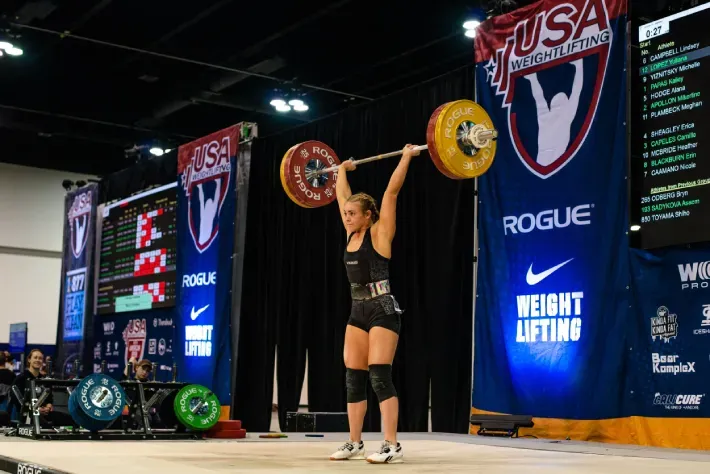
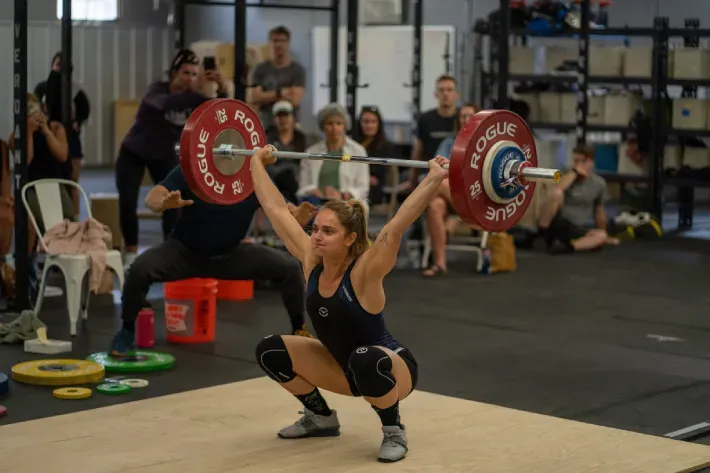
Verdant CrossFit and the Olympic Lifting Methodology Olympic lifting is one of the purest expressions of human strength and athleticism. The snatch and the clean and jerk demand an intricate balance of speed, coordination, precision, and raw power. Within CrossFit, they often serve as a dividing line between athletes who have mastered the barbell and those who remain intimidated by it. To watch a technically sound snatch is to witness an athlete achieve both grace and explosiveness, a rare harmony in sport. At Verdant CrossFit, Olympic lifting has become a hallmark of success, largely due to the distinct approach of owner and head coach Basile. His philosophy, shaped in part by his experiences studying in Russia, diverges from conventional coaching models and has produced results that speak for themselves. Basile’s path into Olympic lifting was anything but ordinary. Basile traveled to Russia, immersing himself in a system renowned for producing some of the world’s most technically efficient lifters. The Russian tradition placed enormous value on rhythm, timing, and the seamless connection between lifter and barbell. Rather than breaking movements into endless stages, the emphasis was on cultivating an instinctive, natural feel for the lifts. That experience left a lasting impression on Basile, reshaping how he would later coach athletes at Verdant. When he returned home, he carried with him a conviction that Olympic lifting had been overcomplicated in much of the CrossFit and American weightlifting community. The constant focus on terminology—the so-called “first pull,” “second pull,” and “third pull”—created lifters who thought too much and moved too little. For Basile, the beauty of the snatch lies in its unity: one fluid motion in which the athlete extends violently yet gracefully, guiding the barbell overhead without interruption. The language of “pulls,” in his view, has led to generations of athletes with compromised technique. When lifters are taught to anticipate distinct checkpoints within the movement, they often hesitate, pull with their arms too early, or disrupt the natural bar path. Instead of moving fluidly, they attempt to stitch together a series of segmented actions, resulting in lifts that look mechanical and lack rhythm. The pull system may have produced strong athletes in the past, but it has also hindered countless others, particularly within CrossFit, where athletes juggle dozens of movements and cannot afford to become paralyzed by complexity. Basile does not completely discard the concept of pulls, but he treats it as a tool of last resort. When an athlete requires a very specific corrective cue, he may briefly reference one of the pulls. Yet he never builds an athlete’s foundation on that framework. Instead, he emphasizes extension as the centerpiece of the snatch. The barbell and the body must rise together in one continuous motion, with the lifter finishing tall and fast before moving under the bar. The snatch, in his teaching, is more akin to music or dance than to a mechanical checklist. Timing, speed, and rhythm are inseparable. This philosophy has defined the culture of Olympic lifting at Verdant CrossFit. Athletes quickly come to understand that they are not expected to memorize technical jargon or recite phases of a lift. They are expected to move, to feel, and to develop a relationship with the barbell that transcends overthinking. For many, this is a liberating shift. The snatch transforms from a source of confusion into a movement that becomes natural, even enjoyable. Importantly, the way Olympic lifting is taught at Verdant varies depending on the goals of the athlete. Those who attend barbell club receive highly specific, detail-oriented training. Their sessions involve intentional technical drills, careful corrections, and progressions designed to refine every nuance of the snatch and clean and jerk. These athletes are often seeking mastery, and Basile provides the environment and coaching precision necessary to pursue it. The focus is on continual refinement, making even the smallest improvements in timing, speed, and bar path. For athletes whose primary focus is CrossFit workouts rather than competitive weightlifting, the coaching is adjusted accordingly. These individuals still learn the same principles of extension, rhythm, and flow, but their instruction is less granular. They are taught to lift safely and efficiently in a way that supports the demands of CrossFit: repeated lifts under fatigue, the integration of Olympic lifting into workouts, and the need for competency across multiple domains. In this context, it would be counterproductive to bog athletes down with endless technical details. Instead, they are given the clarity they need to perform confidently without sacrificing the broader scope of their training. This distinction between barbell club and general CrossFit programming reflects one of Basile’s core beliefs: coaching must be athlete-specific. There is no single script that applies equally to all. A competitive barbell athlete requires exactness, while a CrossFitter benefits from simplicity. Yet in both cases, the underlying philosophy remains the same: do not overcomplicate the lift. Focus on extension, timing, and trust in the body’s ability to move naturally. The results of this approach have been undeniable. Verdant athletes regularly demonstrate lifts that are fluid, fast, and efficient. Their movement often stands out in competition settings, where others appear rigid or hesitant. The natural rhythm cultivated in Verdant’s program is apparent not only to coaches but also to spectators, who often remark on the ease with which Verdant lifters move heavy weight. Many athletes who once struggled with Olympic lifting elsewhere have experienced breakthroughs after joining Verdant, crediting Basile’s philosophy with helping them “unlearn” habits that had held them back for years. Looking ahead, Olympic lifting will continue to serve as a defining strength of Verdant CrossFit. Basile’s roots in the Russian tradition remain strong, but he consistently adapts his approach to meet the evolving needs of his athletes. He views coaching as a living practice, one that must change with the athlete rather than remain bound by rigid dogma. What will not change, however, is his conviction that the snatch should be taught as a fluid, unified extension, free from the clutter of excessive segmentation.