Why Verdant Gymnastics
The Benefits of Accessory Gymnastics on the Everyday CrossFitter
Early in 2016 we had a young woman walk into our gym and tell us that she wanted to make CrossFit Regionals in two years. Anyone that knows me is fairly aware that I am very realistic about goals, future PRs, and expectations. I saw a VERY undersized young lady with almost no musculature, extreme hypermobility, and who was also vegan or vegetarian. We had several short talks about what it takes to get to that level, I told her about some benchmarks, and showed her Tommy Hackenbrook’s benchmarks for his regional team athletes from 2013. At that point she had never even done a snatch so the weights were relatively meaningless but the point was simply that she had a long way to go and a lot of work to put in if that was the goal.
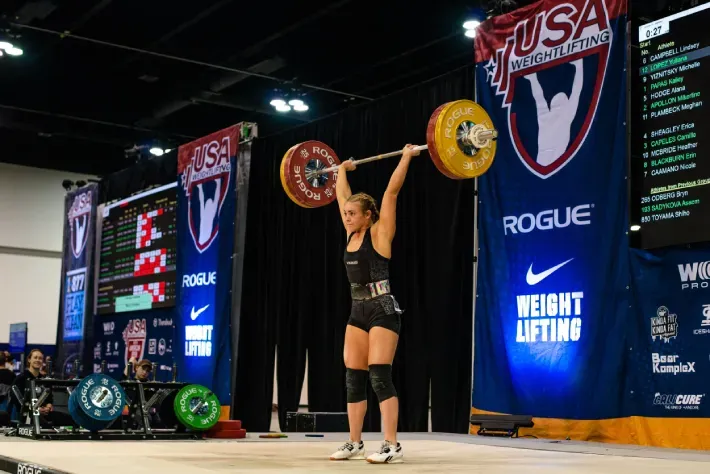
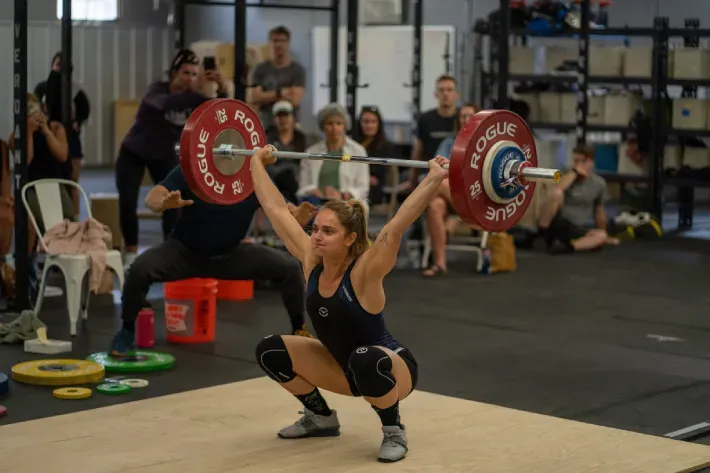
A few months later we couldn’t keep her out of the gym. She did the class WoD, extra gymnastics strength programming because she couldn’t do a push up or a pull-up, and eventually she started the barbell development program. One thing was certain - she was very determined.On top of everything else, she started working out with our designated gymnastics crew who tool around and work on compression, mobility, and static core strength for hours in the evening. For about 6 months she practiced inversions, straddle presses, L-sits, wall L-holds, and a myriad of other uncomfortable holds on parallettes. She switched up her diet a little, gained some weight and around that time she was participating in all of the class strength cycles. She started to lift a lot of weight, not only in power lifts but in the olympic lifts as well. She was still hypermobile and had a few muscular weaknesses but she had gained an amazing level of kinesthetic awareness and control.
Our WoDs can only be one hour long and try as we might we can’t get everyone to show up to each day of the week. Thursdays and Sundays the programming is heavily skewed towards gymnastics with a major emphasis on core and shoulder stability. Those exercises are incredibly hard for anyone and everyone and the physical difficulty is compounded and probably multiplied with mental frustration. It is a fact that most of our athletes can lift a substantial amount of weight overhead and with their legs. I think that lifting is easier to attack as an athlete because there are obvious benchmarks of success and that effort can be empirically determined and proven. With gymnastics work, it is much harder to determine effort and even harder to see if that effort has gone to waste or benefit. There is the additional issue that many people can lift a lot of weight but can’t necessarily hold their legs in front of them for any substantial amount of time and that conflict is problematic for most athletes. On the one hand we have powerlifting and olympic lifting strength cycles that emphasize the repetition of the same movements with increased loads. It is easy to see progress not only in the lifts but it also has obvious benefits when doing GPP WoDs.
And herein lies one of the “issues” with an hour long format. It is fairly easy to make people strong and fast. Making people strong, fast, structurally balanced, and kinesthetically aware is actually pretty hard. It is fairly easy to psyche up a lady who wants to get a 155lbs back squat, there is a bar and it needs to be attacked. That same athlete is going to seriously struggle more often than not with a simple push-up where the lower lumbar isn’t surrendered, the core remains intact, and the traps aren’t over engaged to assist the triceps. Most of the athletes can’t even tell if they’re in the correct position or not and when they do achieve the correct position they can’t hold it for more than a few seconds.
In the past several years there has been a major change in the way that competitive CrossFit was being explained by coaches and athletes and the emphasis in training was also obviously modified substantially. Once everyone was able to snatch roughly 255 and clean 315 unless you were doing a lot more than everyone else no one was interested in posting heavy single reps. So posts turned to “accessory” work and #gymnasty routines and movements that separated the athlete from their counterparts. Here is where our young athlete made a substantial mental jump and skipped a few counter-productive years. She began to work on compression, shoulder stability, kinesthetic awareness, and inversion. And all of a sudden she was olympic lifting more than most women at the gym. It took about 8-12 months of work.
Typically, anyone that is serious about progressing in the sport of CrossFit or who simply wants to become better in a non-competitive way begins to hit plateaus. Strength cycles work to break through strength barriers but lack of mobility and core stability are usually the obvious culprits for unlocking further athletic heights. The bottom line is that movements like the L-hang or L-sit, while boring and less flashy, are necessary to continue lifting more and moving heavier loads faster over time.